|
|
 |
EUROMAT - About us
"Gaming is regulated at national or regional level in the European Union: given the specificities of the sector, this should remain the case. "
What is EUROMAT
The European Gaming and Amusement Federation EUROMAT was established in 1979 to represent the European amusement and gaming industry at EU level, and consists of 23 member National Associations from 20 European countries, namely: Austria, Belgium, Bulgaria, Croatia, Denmark, France (observer status), Germany, Greece, Hungary, Ireland, Italy, Lithuania, the Netherlands, Poland, Romania, Serbia, Slovakia, Spain, Sweden and the United Kingdom. EUROMAT endeavours to stay abreast of any European policy developments and therefore is run by a Brussels based secretariat and has an Executive Committee which advises the General Assembly on all matters requiring to be considered.
The overall mission of the Federation is to contribute to the creation of a healthy business and legal environment in the EU for the gaming sector.
-
EUROMAT instigates dialogue with the European Union and other pan-European bodies. It hopes to use its position and membership to stimulate debate and awareness.
-
EUROMAT monitors and influences the European regulations on legal, commercial and technical aspects of the business to guarantee the best possible future for the industry.
-
EUROMAT gives one voice to its members on commercial and legislative matters affecting their business and makes known the views of its members in the debate surrounding issues.
-
EUROMAT defends the industry interests by providing continued and accurate information to the citizens, the media and the administrations on the gaming sector.
-
EUROMAT supports all member associations in their efforts to adopt, promote and enforce the appropriate code of conduct for themselves and their associates.
EUROMAT is a dedicated follower of European political developments but also endeavours to follow the international developments. As such, EUROMAT meets with its counterparts from the world on the occasion of a bi-annual International Summit meeting.
What are gaming and amusement activities?
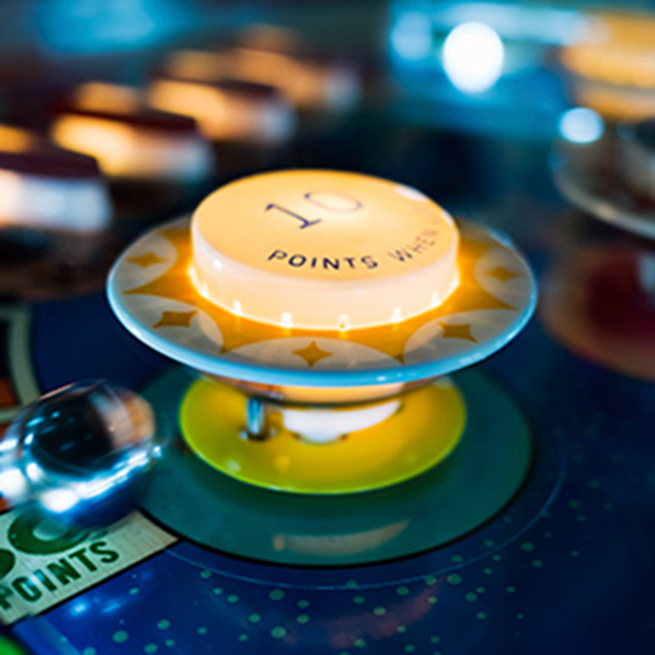
The EUROMAT members range from operators, manufacturers, distributors and owners of amusement equipment. Amusement / leisure / entertainment equipment include most of the time coin-operated machines (or coin-op machines) which means that the machines employ coins to provide customers with fun and entertainment. Most coin-op equipment accepts legal tender coins; some do accept tokens, especially those operated in specific areas (amusement arcades, family entertainment centres), and some accept bank notes as well, but the Law requires in most jurisdictions that the Amusement With Prize machines (customers can at times also be rewarded with prizes which are fairly modest) are paid in cash only. The magnetic or chip card is only used in large centres with a wide variety of games. There are many forms of coin-op machines such as kiddie rides, mini bowling alleys, cranes, fruit machines, video games, air hockey tables, etc. but the machines are usually classified into three different categories:
The first category is for the so-called table or "sports machines", which simulate or replicate sports games. Table soccer, basketball machines, mini bowling alleys, electronic darts, all fit into this category.
The second category is the "amusement games", where players spend their money just for the fun of playing the machine, either alone or in competition with other players. No cash pay out is given to the player. In some cases, the machine gives away a small prize, either in the form of low priced goods, replay tokens or redeemable tickets.
The third category is the Amusement With Prize machines (AWP). These are coin-in, coin-out, low payout machines, easily found in the UK pubs, Spanish cafeterias and German arcades. These machines provide fun and limited cash prizes - up to €100, approximately - to the lucky players.
There is no specific European legislation on gambling, but in 2005, the EU institutions were involved in the gambling sector more than ever before, for mor information on EU legislative developments, please see the Issues section. However, the sector is highly regulated at national level and taxed activity and its national legal frameworks are very diverse. To know more about the legal situation of the Coin-Op industry in all the countries represented in Euromat, select the country of interest on the country page.
|